

Breathe with ease
Allergies, Asthma, COPD
Hay fever, rhinitis and post-nasal drip
For some people, the nose is where the whole cycle begins. But it's also where it can end too.
The pollen season arrives. Your nose becomes congested. You start mouth breathing. Your breathing can become faster, heavier or more effortful.
Your airways are then exposed to more of the outside environment, including cold, dry air and airborne irritants. You then start coughing or clearing your throat. Mucus builds up. Now you’re breathing more. And the cycle continues, if not worsens.
This doesn't mean breathing retraining replaces allergy treatment or medical care for rhinitis. It means that your breathing pattern becomes another part of the picture we can work with, while also giving you a number of natural strategies that may complement your existing treatment.
And if your nose is congested, our first goal is to make nasal breathing more comfortable.
What about post-nasal drip?
Post-nasal drip can be particularly frustrating because you can feel like you're constantly swallowing, clearing your throat or coughing.
It can be associated with conditions such as allergic rhinitis, non-allergic rhinitis and sinus problems, where excess mucus or changes in the way mucus drains from the nose can create that familiar sensation at the back of your throat.
This is another reason I want to know what's happening in your nose before simply telling you to breathe through it.
We need to understand what is contributing to the congestion, mucus and irritation. I have found that as I work with clients to improve their functional breathing, their congestion improves, as does their post-nasal drip.
And sometimes, a simple saline nasal rinse can become one useful part of that picture.

Saline nasal rinsing
A saline nasal rinse, such as using a neti pot with a good quality organic Celtic salt such as Salt of the Earth, available at most health food shops, can help wash mucus and allergens from the nasal passages and may help reduce symptoms of allergic rhinitis.
You can dilute approximately half a teaspoon in warm water, tilt your head to the side while rinsing the solution through the opposite nostril, and then repeat on the other side. Fess Nasal Rinse and Flo Sinus Care are also options.
For some clients, this can make the nose feel more comfortable and accessible, which then gives us a better starting point for developing nasal breathing.
I often advise clients that using the neti pot option and creating a little ritual out of it can make it feel less of a chore. Starting and finishing your day with this can be extremely beneficial.
You might wash your face morning and night to clean the dirt off, so consider this a thank you to your nostrils that do so much for you, while rinsing out any lingering irritants.
.jpeg)
What else can we add to the rinse?
For some clients, particularly those dealing with persistent congestion, mucus or recurrent sinus issues, I've worked with Naturopaths who have also recommended adding specific herbal extracts to a nasal rinse. Pomegranate and goldenseal are two that may be considered for their antimicrobial and anti-inflammatory properties.
This isn't something I prescribe as a one-size-fits-all approach. It's something we look at individually with your Naturopath, depending on what's happening in your nose and airways and what else may be going on with your health.
While on this topic, I would also recommend working with a Naturopath and or Functional Doctor to undertake allergy and environmental testing from reputable labs such as NutriPATH and RN Labs.

Your nose is an incredible piece of respiratory equipment
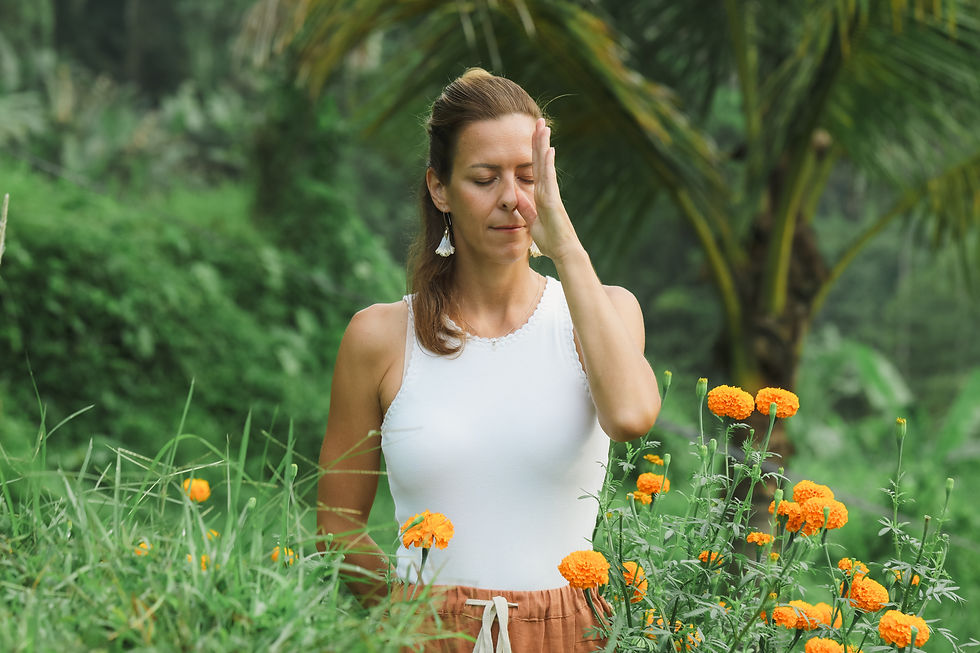
Your nose isn't simply a hole that air travels through on the way to your lungs. For some of you, you miss this entirely and breathe through your mouth, which is the first thing we need to correct.
It’s your body's first filtration and conditioning system for incoming air.
The nasal passages help to:
-
Filter particles
-
Warm the air
-
Humidify the air
-
Cleanse the air before it reaches the lungs
Mucus helps trap particles, while the tiny hairs and cilia within the respiratory tract help move unwanted material away.
And then there's one of my favourite parts of the nasal story:
Nasal nitric oxide
Your nasal passages and sinuses are an important source of nasal nitric oxide.
Nasal nitric oxide has a range of physiological functions within the respiratory system and has been shown to have antimicrobial and airway-related effects.
So when I ask you to breathe through your nose, I'm not simply asking you to close your mouth.
I'm asking you to use the respiratory system you were designed with. And as an added bonus, because the nostrils are smaller than those of the mouth, they're going to help you slow your respiratory rate (RR), which is also an important part of the equation alongside breathing volume.
There is also research showing that the nose plays an important role in filtering, humidifying and immune surveillance, rather than simply being a passageway for air.
What about COPD?

COPD is different from asthma, and I want to be very clear about that. Of course, there are some similarities.
If you have COPD, appropriate medical management, medication, monitoring and pulmonary rehabilitation remain important. Breathing retraining doesn't replace any of these.
But there is another part of the COPD conversation that I think is worth exploring. Your breathing.
Breathlessness can become one of the most frustrating parts of living with COPD. You may start to avoid movement because you know it makes you breathless. You may find yourself taking bigger, harder breaths in an attempt to get more air. And over time, the fear of becoming breathless can start to influence how you move, exercise and live your life.
This is where breathing strategies can become another tool, as well as working on your nervous system.
Research into breathing exercises in COPD has found potential benefits for aspects of ventilation, respiratory rate, exercise tolerance and quality of life.
A 2025 systematic review of non-pharmacological breathing strategies in adults with stable chronic lung disease found low-quality evidence that breathing techniques may reduce dyspnoea and that breathing retraining may improve health-related quality of life.
I want you to imagine if I trained you to learn everyday breathing that allows a breath cycle to move through your respiratory system calmly and effortlessly. Wouldn't that make breathing feel a whole lot different?
What might we look at?
-
How are you breathing at rest?
-
How much effort are you using?
-
Are you breathing predominantly through your upper chest?
-
Do you breathe through your mouth?
-
What happens to your breathing when you stand up and walk?
-
How quickly does your breathing increase?
-
What happens when you become breathless?
-
And perhaps most importantly, what happens in your mind when you feel that breathlessness?
Because breathlessness isn't simply a measurement of how much air is moving in and out of your lungs. The sensation itself can become frightening, which can then influence how you breathe and how much you move.
This can create a cycle of:
Breathlessness → fear → more effort → less movement → reduced fitness → more breathlessness.
We can work on the parts of that cycle that are within our scope.
Breathing during movement
I also particularly want to look at how you breathe when you're walking and exercising.
We don't necessarily want to force nasal breathing at every intensity. With COPD, your breathing needs to respond appropriately to the metabolic demands of movement.
Instead, we work within your individual capacity.
Can we make your breathing calmer at lower intensities? Can we reduce unnecessary effort? Can we help you feel more confident with movement?
And can we gradually build your tolerance to physical activity alongside your existing pulmonary rehabilitation or exercise program?
I don't replace your respiratory team
Pulmonary rehabilitation is an important part of COPD management and has strong evidence for improving exercise capacity, breathlessness, quality of life and confidence in managing the condition.
I don't replace your respiratory specialist, GP, physiotherapist or pulmonary rehabilitation team.
I become another part of the team.
My role is to look specifically at your breathing pattern and help you develop strategies that may make breathing and movement feel more manageable.

Asthmatics can be some of our biggest overbreathers
This is one of the things I find most fascinating about working with people with asthma.
It's been documented in many research papers and studies, asthmatics are some of the biggest overbreathers I work with. And this isn't necessarily obvious. You don't have to be gasping for air to be overbreathing.
You can be sitting quietly on the couch, breathing through your mouth, taking large breaths, sighing regularly or simply moving more air than your body needs.
World renowned breathing expert Patrick McKeown often states that asthmatics breathe approximately 10 to 15 litres per minute compared with 5 to 8 litres per minute in healthy adults.
This is one of the reasons breathing volume plays such an important role in the Buteyko Breathing Method
And this is where I introduce one of my favourite analogies.
The air diet
If a nutritionist or dietitian is working with someone who is consistently eating more food than their body needs, they may put them on a food diet to help them with their weight loss goals.
With Buteyko, we can think about breathing in a similar way. Air is essential. We all know that. With it we live, without it we die.
But more isn't necessarily better. And given asthmatics, and even some people with these other conditions, can be breathing more than they metabolically need, we put you on an ‘air diet’.
We're not depriving you of oxygen. We're gradually teaching your body that it doesn't need to work so hard to breathe.
The goal is to develop a quieter, lighter and more efficient breathing pattern that better matches what your body actually needs.
Less air can mean less coming into your airways
There's another part of this analogy that I share with all my clients, and this might make your ears prick up if you are an allergy sufferer.
Every breath brings the outside environment into your respiratory system.
Pollen. Dust. Pet dander. Smoke. Household chemicals. Unclean air conditioning. Pollution. Cold, dry air. Non-organic bedding. Other airborne irritants.
So if you're moving unnecessarily large volumes of air all day, you're also moving more of the outside environment through your airways.
And this brings us to the nose.
What does this look like in real life?

_edited.png)
“I've had three sessions with Alana so far. Since then my need to use Ventolin for asthma symptoms has decreased dramatically. From needing to use it almost daily, I've gone as long as three weeks without using it since practising the breathing exercises Alana taught me.”
Mia, Melbourne VIC
Verified Google Review

Research & Further Reading
Want to start learning? Breathing 101
Learn the foundations of functional breathing and discover the skills no-one ever taught you. A 75-minute introduction to the Buteyko Breathing Method, with practical exercises you can take into everyday life.
Or ready to explore your breathing?
Let’s talk about your story, what you’re experiencing, what you notice, and explore whether breathing retraining could benefit you.